Throughout Germany’s
history there has been a tradition of separatism and division among the
nation’s various regions. After the final elimination of the Holy Roman Empire,
however, German kingdoms and states began to unify, sometimes through
revolutions and proclamations, and sometimes due to outside forces. Despite the
attempts at unification, however, most of Germany remained divided into many
parts, especially from a cultural perspective.
What changed primarily
in this time period, then, was other nations’ perceptions of Germany. When the
rest of Europe began to treat all Germans as if coming from one heritage,
Germans themselves began to follow suit. One notable example can be seen in the
Franco-Prussian (and later Franco-German) War of 1870-1871. As Schulze explains
on p. 142, Spain’s empty throne called for a Prussian king to rule the land;
France, however, was more than a little nervous about being surrounded by
Germans, so they naturally applied pressure on Prussia to refuse such an offer.
When Bismarck refused to cave to France’s ever-increasing demands, France
declared war on Prussia that evolved into a war on German lands in general.

What caused the rest of
Germany to become involved in this dispute was primarily the fact that, to
France, all Germans were simply that: Germans. Having a Prussian king to the
south and Southern German states to the north would mean being surrounded by
the same group of people, ones with whom France had particularly bad blood in
the past. While Most Germans had nothing to do with this war, though, a number
of treaties meant that they would be forced to comply with Prussia’s request
for aid. In this way, a disagreement between France and Prussia led to an all-out
war between France and all of Germany.
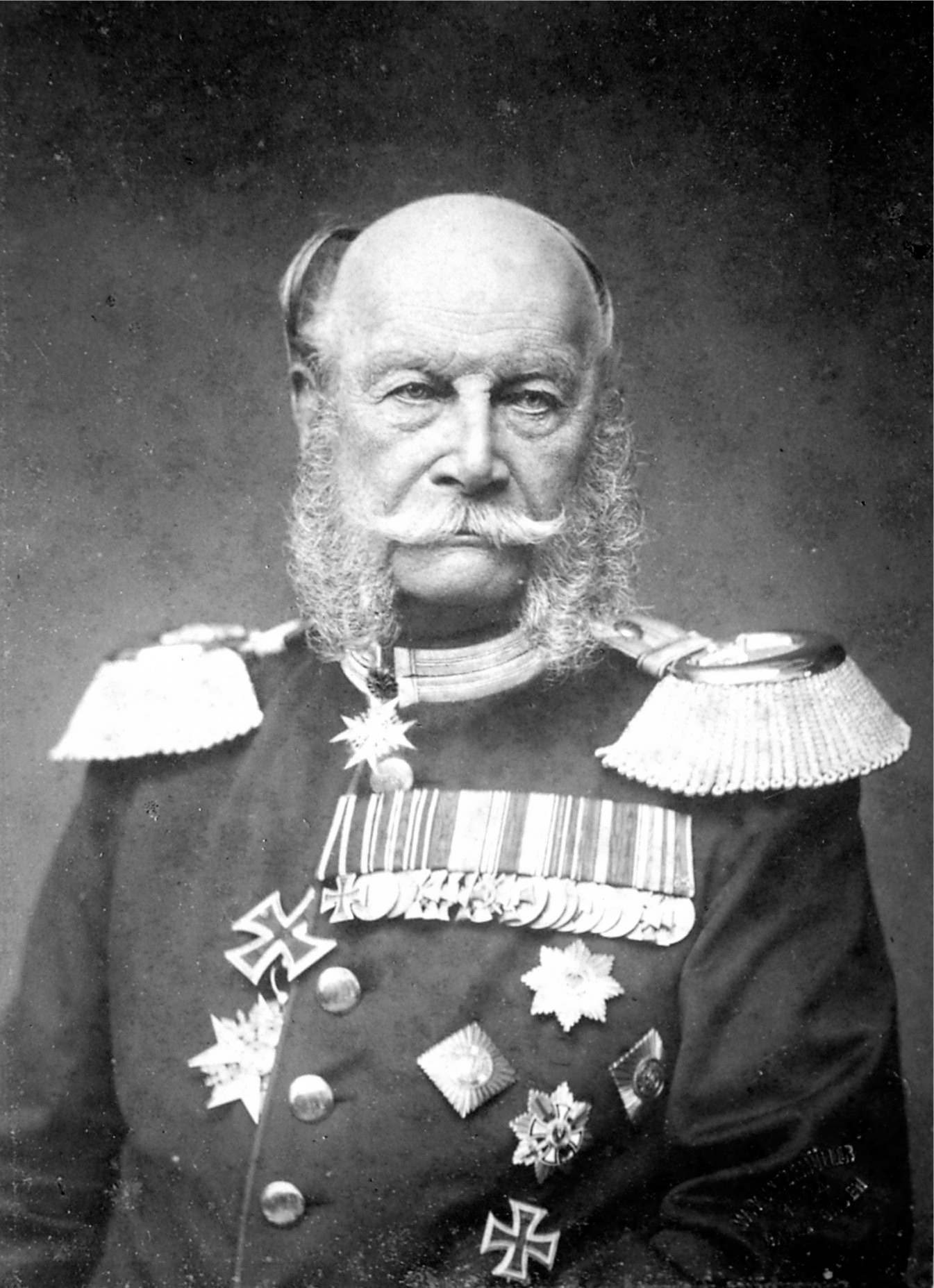
The effects of this war
were far-reaching for Germans. Patriotism reached a definitive high point both
for the public and the media—fighting together (and indeed, winning together)
gave Germans from across the many lands a new vision of a nation that was truly
connected and unified. The Southern and Northern division no longer seemed
feasible; why be two separate halves when unification could mean considerably
more global power and wealth? This new nation now finally had the approval of
both necessary parties: the nobility who yearned for power and the public who
wanted better living conditions and national identity.
Despite the many
considerable influences, all of this cannot be solely pegged upon victory of
the Franco-Prussian war. Rather, the war was definitely a catalyst, and the
victory a moment for Germans to devise a new vision for their future as a
nation; but this was not the “reason,” nor can there be just one. Many factors
were involved, involving international influence as well. In the 1850s,
according to Schulze on p. 137, a wave of French nationalism inspired Germans
to respond accordingly; if the adage “old habits die hard” has any truth, it
can be seen in the France-Germany relationship of the 19th century.
Before this, of course, was the initial catalyst: the failed German Revolution
of 1848. What caused the Revolution to fail was, at its root, was caused the
unification in 1871 to succeed: identity.
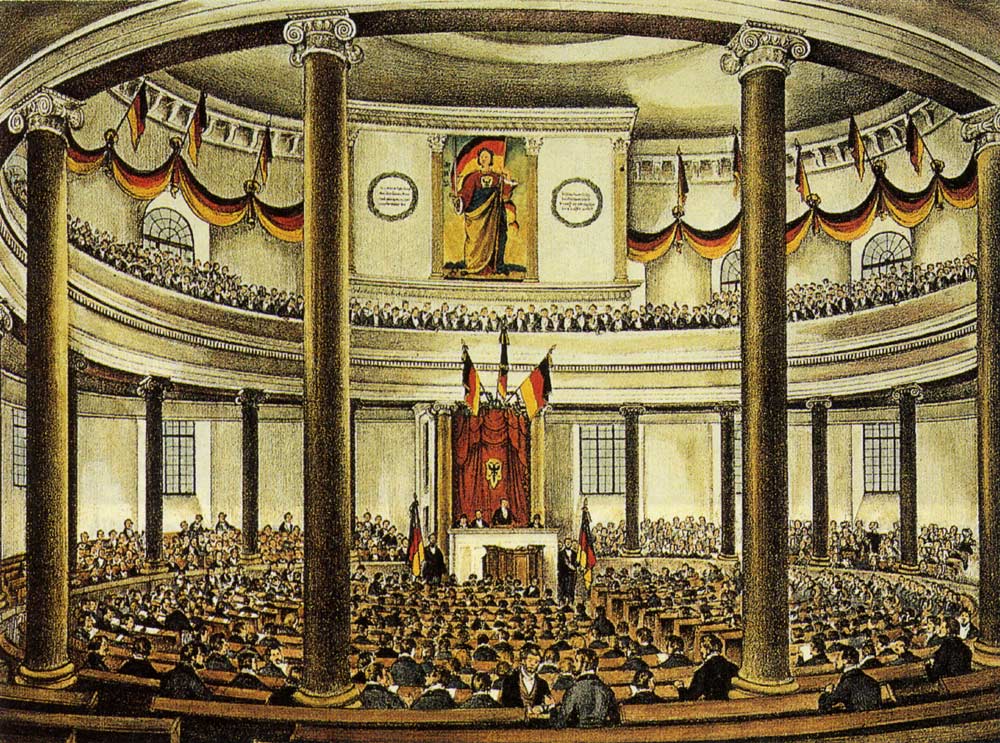
In 1848 Germans working
toward unification saw three different solutions, each one giving power to a
different party (Schulze p. 126). Despite parliamentary meetings and political
fervor, no decision was ever made; ultimately the German people could not
decide who was, in fact, German; moreover they could not decide how these
Germans would be best represented. By 1871, however, the series of catalysts
and motivations gave the Germans a much clearer picture of who they were and
what they stood for. It no longer seemed impossible to define Germany’s borders
and connect its many cultural roots—Germans were finally inspired to unite in
order to combine strength and become a larger presence in Europe and across the
globe.


No comments:
Post a Comment